
Aufgabe 1.2
TASKS
Outline the information on the author’s past online behaviour and how she has dealt with it.
Analyze the way the author presents her addiction. Focus on communicative strategies and use of language as well as the picture published with the article.
Choose one of the following tasks:
“When I returned home to Nigeria, I resolved to extricate myself from the grips of what I had finally come to acknowledge as a behavioural disorder.” (ll. 36-38)
Using the quote and the author’s experience as a starting point, assess the potential effects that constantly being online could have on people.
OR
For your English partner school’s webpage dedicated to “Social Media Awareness Day 2026”, write an article in which you discuss the opportunities and risks for young people aspiring to start a career in the field of social media.
Text: Article
Googling my name became an obsession, every hour of every day – I needed help
By Adaobi Tricia Nwaubani1
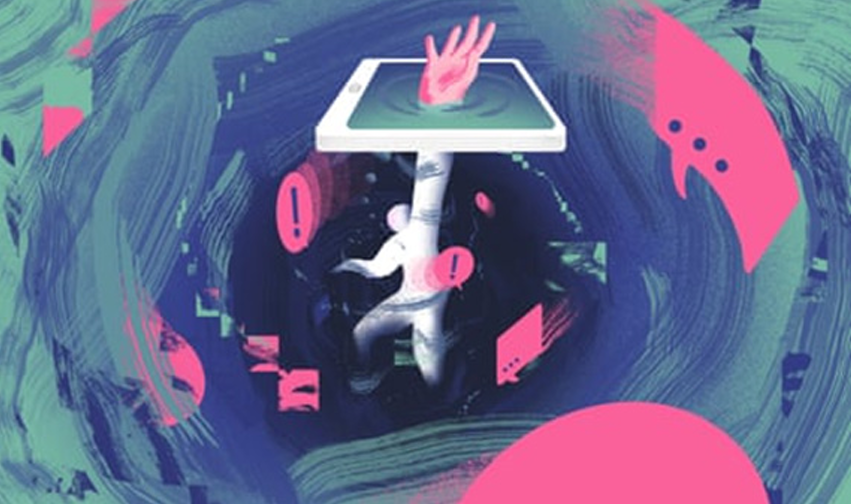
Illustration: Tsjisse Talsm
[…]
1 Adaobi Tricia Nwaubani – female Nigerian novelist and journalist
2 modem – communication hardware device to connect computers with the internet
3 to fall down the rabbit hole – getting lost in something or ending up in a strange or difficult situation
(796 words)
Nwaubani, A. T. “Googling my name became an obsession, every hour of every day – I needed help.” The Guardian. August 24, 2024. Accessed October 8, 2024 from https://www.theguardian.com/commentisfree/
article/2024/aug/12/why-i-quit-googling-my-name.
Nwaubani, A. T. “Googling my name became an obsession, every hour of every day – I needed help.” The Guardian. August 24, 2024. Accessed October 8, 2024 from https://www.theguardian.com/commentisfree/article/2024/aug/12/why-i-quit-googling-my-name.
Weiter lernen mit SchulLV Plus!
monatlich kündbarSchulLV Plus-Vorteile im ÜberblickDu hast bereits einen Account?Please Note: The solutions presented here are just one possible way to approach the task. There are often multiple valid methods and perspectives, and alternative approaches may be equally effective.
In her article “Googling my name became an obsession, every hour of every day – I needed help”, published in The Guardian in 2024, Nigerian author Adaobi Tricia Nwaubani describes her former addiction to searching for her name online and explains how she managed to overcome this behaviour.
Nwaubani’s obsession started in 2009 shortly before the publication of her first book. After googling her name and discovering hundreds of search results about herself, she became fascinated by the attention she was receiving online. She began reading every review, blog entry and comment she could find and soon started searching for her name several times a day. Over time, this behaviour developed into a compulsive habit.
The author constantly tried to stay online in order not to miss any new publication or mention of her name. Since smartphones and mobile internet were still uncommon in Nigeria at the time, she used every opportunity to access the internet. She searched for her name at work, at home and even during social events. When she was visiting friends, she sometimes borrowed their phones or laptops to continue googling herself. She also isolated herself from other people by leaving gatherings and sitting alone near internet modems to continue her searches.
In addition, Nwaubani became increasingly obsessive in the way she searched online. Whenever there were no new results, she repeatedly refreshed the page until something new appeared. She even started using different spellings and misspellings of her name to make sure she would not miss a single result. The excitement she felt when discovering a new mention of herself online strengthened her addiction further.
Eventually, the author realized that her behaviour had become unhealthy and uncontrollable. During a visit to India in 2010, she understood that other writers had similar habits and suddenly recognized her googling as a real addiction. This realization frightened her and motivated her to regain control over her online behaviour.
Using her background knowledge in psychology, Nwaubani created her own form of therapy. She trained herself to resist the urge to google her name for short periods of time and gradually increased these intervals. At first, she avoided searching for one hour, then for several hours, later only once a week and finally only once a month. This method slowly weakened her compulsive need to search for herself online.
Today, Nwaubani considers herself free from the addiction. She explains that she has not googled her own name since 2011, although she may occasionally search for the titles of her books or specific articles she has written. Nevertheless, she remains aware of the danger of falling back into her old habit and therefore avoids searching for herself online altogether.
In her article, Adaobi Tricia Nwaubani presents her addiction to googling her own name as a serious psychological problem that gradually took control over her life. By using personal experiences, emotional language, metaphors and psychological vocabulary as well as the accompanying illustration, she emphasizes both the danger and the addictive potential of online behaviour.
From the beginning, the author presents her habit as pathological and harmful. Already in the headline, “Googling my name became an obsession, every hour of every day – I needed help”, the words “obsession” and “needed help” clearly frame her behaviour as an addiction. Furthermore, she directly compares herself to addicts when she explains that the “signs of [her] addiction” were “subtler than those of an alcoholic or drug addict” (l. 9). This comparison underlines the seriousness of her condition even though it was not connected to substances.
The author also illustrates the extent of her addiction through detailed descriptions of her compulsive behaviour. For example, she states that she “continuously refreshed the page” and that finding a new mention of herself felt “euphoric” (ll. 16-18). The term “euphoric” suggests an emotional high similar to the feeling experienced by addicts. Moreover, she explains that she adapted her searches to include numerous misspellings of her name (ll. 19-21). This detailed list demonstrates how obsessive and irrational her behaviour had become. Specialized vocabulary from the field of psychology further reinforces the idea of a mental disorder. Expressions such as “personal neurosis” (l. 29), “behavioural disorder” (l. 38) and “compulsive urge” (l. 46) present her addiction as a serious psychological issue that disrupted her life.
At the same time, Nwaubani explains the driving forces behind her addiction. She describes her excitement and pride about her growing online visibility in emphatic language. She is “flabbergasted to see page after page of results” about herself (l. 2), and the repetition of references to numerous search results emphasizes her fascination. In addition, the contrast between “just four results” one year earlier and “600” results later (ll. 5-6) highlights how suddenly her public recognition increased. The metaphor “I devoured every one of them” (l. 6) suggests greed and hunger, showing that she consumed every online mention of herself eagerly. These stylistic devices demonstrate that attention and recognition became the emotional rewards that fuelled her addiction.
Furthermore, the author shows how her behaviour gradually developed for the worse over time. The metaphor that her “fascination quickly spiralled into something much darker” (ll. 7-8) creates the image of losing control and being pulled deeper into addiction. Similarly, the repetition in “every hour of every day” (l. 8) stresses the constant nature of her obsession. Emotive language also reveals her growing fear when she realizes that many other people share similar habits. She describes being “caught (…) completely off guard” (l. 27) and experiencing a “rising sense of panic” (l. 33). These expressions underline the danger of not recognizing addictive behaviour before it becomes overwhelming.
Another important aspect is the way her addiction negatively affected her social life. The author gives concrete examples of how she prioritized googling herself over spending time with other people. She borrowed friends’ phones or laptops when she was out with them (ll. 13-14) and even “excuse[d] [herself] from gatherings” and isolated herself in another room to continue searching online (l. 14). These examples demonstrate how addiction can damage personal relationships and lead to social isolation.
However, the article also presents addiction as manageable, although the danger never completely disappears. Nwaubani explains that she actively fought against her compulsive behaviour by creating a self-imposed therapy programme. Metaphorical language such as “regaining control” (l. 40) and “channelled every ounce of willpower” (l. 41) emphasizes the effort required to overcome addiction. In addition, the phrase “my brain’s craving (…) diminished” (ll. 46-47) again uses language associated with substance addiction. Finally, expressions such as “managed to kick the habit” (l. 48) and the metaphor “fall back down the rabbit hole” (l. 53) suggest both success and the continuing risk of relapse. Thus, the author conveys a hopeful but cautious message.
The illustration published with the article supports these ideas visually. In the centre, a person appears to be pulled into a dark hole or abyss through a screen or tablet while reaching out for help. This image symbolizes how the internet can trap people and make them feel powerless. The bright and unnatural colours, such as pink, blue and turquoise, increase the intensity of the scene and emphasize the dangerous attraction of the online world. Furthermore, the round speech bubbles with exclamation marks suggest cries for help or overwhelming digital noise. Overall, the picture conveys a sense of helplessness and loss of control, reflecting the article’s main message about the addictive potential of the internet.
In conclusion, Nwaubani presents her addiction as a serious but manageable psychological problem. Through personal anecdotes, emotional and figurative language, psychological terminology and the striking illustration, she effectively shows how easily online behaviour can become addictive and how difficult it can be to escape from it.
In the quotation, Adaobi Tricia Nwaubani explains that she finally recognized her compulsive online behaviour as a “behavioural disorder” and decided to regain control over her life. Her experience shows that constantly being online can become difficult to control and may seriously affect people’s social life, health and overall well-being. However, permanent online access can also have positive effects if used responsibly.
One major negative effect of constantly being online concerns social relationships. People who spend excessive amounts of time on the internet may neglect family members and friends. Instead of meeting others in person, they often prefer online interaction or isolate themselves completely. As described in the article, Nwaubani sometimes left social gatherings to continue searching for her name online. Such behaviour can damage friendships and relationships because affected people give less attention to their partners, children or friends. Over time, this may lead to loneliness, alienation and a loss of empathy and social skills. In addition, social media and online platforms often expose users to disinformation and echo chambers, which can increase social and political divisions in society.
Constant online activity can also negatively influence academic and professional performance. Many people become distracted by social media, online games or endless scrolling and therefore struggle to focus on school, university or work. As a result, students may receive poor grades or even drop out of education, while employees may lose productivity or their jobs. In the long term, this can limit career opportunities and create financial problems.
Another important aspect is physical health. People who spend most of their time online are often less physically active and spend more time indoors. A lack of exercise combined with unhealthy habits can increase the risk of obesity, diabetes and other health problems. In addition, excessive screen time may cause sleeping disorders, headaches or eye strain.
The psychological consequences of constantly being online can be especially serious. Social media often confronts users with unrealistic beauty standards and idealized lifestyles, which may reduce self-esteem and increase feelings of insecurity. Furthermore, online bullying, hate speech, violent content and “doom-scrolling” can contribute to stress, anxiety and depression. Similar to Nwaubani’s experience, online behaviour may also become addictive because users constantly search for emotional rewards such as likes, messages or recognition. This can create compulsive habits and make it difficult to disconnect from the internet.
Financial consequences are another possible risk. Many online platforms use targeted advertising and in-app purchases to encourage consumption. As a result, people may spend excessive amounts of money on online shopping, gaming or digital services without realizing how much they are spending.
On the other hand, constantly being online can also have positive effects. Socially, the internet allows people to connect with others who share similar interests or experiences. Online communities can be especially valuable for minorities, people living in rural areas or individuals who struggle with face-to-face communication. Digital communication may therefore reduce feelings of isolation and help people find support.
In addition, being online can improve professional opportunities. Digital skills are increasingly important in modern society, and online platforms such as LinkedIn or Indeed help people find jobs and build professional networks. The internet also offers opportunities for creative hobbies and self-expression, for example through online gaming, content creation or generative AI tools. Furthermore, constant internet access allows people to stay informed about current events and new developments worldwide.
In conclusion, constantly being online can have serious negative consequences for social relationships, health and mental well-being, especially when online behaviour becomes addictive and uncontrollable. At the same time, the internet also provides important social, professional and creative opportunities. Therefore, the effects largely depend on how responsibly and consciously people use digital technologies. Nwaubani’s experience demonstrates that maintaining balance and self-control is essential in order to benefit from the online world without becoming trapped by it.
A Career in Social Media – Dream Job or Dangerous Trap?
Today, many young people dream of becoming successful on social media. Platforms such as Instagram, TikTok and YouTube have created completely new career opportunities. Influencers, streamers and content creators can reach millions of people worldwide and sometimes earn large amounts of money. However, a career in social media also involves serious risks and challenges that should not be underestimated.
One major opportunity is the possibility of creative self-expression. Social media allows young people to create content about almost any topic, including fashion, gaming, politics, music, fitness or mental health. This gives creators the chance to turn their hobbies and passions into a career. In addition, social media platforms allow people to reach a very large audience. Influencers can use their platforms not only for entertainment but also to raise awareness about important social and political issues. As a result, they may inspire activism and encourage positive change in society.
Another advantage is financial independence. Successful content creators can earn money through advertising, sponsorships and brand partnerships without working a traditional “9-to-5” job. Many people are attracted by the flexibility of working remotely and organizing their own schedules. Social media careers can therefore offer greater compatibility between work and private life. Furthermore, the field is open to almost everyone because no university degree or formal qualifications are required. Anyone with creativity, determination and internet access can potentially become successful online.
In addition, social media careers often provide recognition and exciting opportunities. Influencers may gain appreciation from large audiences, meet interesting people and even become famous. For some, social media can also serve as a first step toward careers in journalism, entertainment or marketing. Successful creators can become role models for younger audiences and influence trends and public discussions.
Despite these opportunities, there are also significant risks connected to social media careers. One major problem is the constant pressure to produce new content. Algorithms reward creators who post frequently, which can lead to stress, exhaustion and a loss of creativity. Many influencers feel that they must always stay active online in order not to lose followers or relevance. This pressure may negatively affect mental health and even lead to burnout.
Another challenge is the loss of privacy. Many influencers share large parts of their personal lives online to appear authentic and connect with their audiences. However, this can make it difficult to separate private life from public life. Young creators may also feel pressured to conform to trends and audience expectations instead of expressing their true personalities. As a result, authenticity can suffer.
Financial insecurity is another risk. Only a small number of influencers earn enough money to live comfortably. Social media careers are often unstable because success depends heavily on algorithms, trends and luck, not only on talent. A creator who is successful one year may lose followers and income very quickly the next. In addition, some influencers may lose their moral compass by promoting questionable products or accepting sponsorships from dubious companies simply to make money.
Furthermore, social media creators are frequently exposed to criticism and hostility online. Hate comments, cyberbullying and unrealistic expectations from followers can create enormous emotional pressure. The high level of competition in the industry may increase feelings of stress, insecurity and anxiety. In extreme cases, the constant search for likes, views and online validation can even become addictive.
In conclusion, a career in social media offers many exciting opportunities, including creativity, flexibility, financial independence and the chance to influence large audiences. At the same time, young people should not ignore the risks, such as stress, insecurity, loss of privacy and mental health problems. Therefore, social media can be a rewarding career path, but only if creators learn to maintain balance, protect their well-being and remain independent from online pressure and validation.