
Thema 4: Voting
Prüfling A
Your school is joining the campaign #YourVoiceMatters to encourage first-time voters to participate in the next election.
Comment on the material.
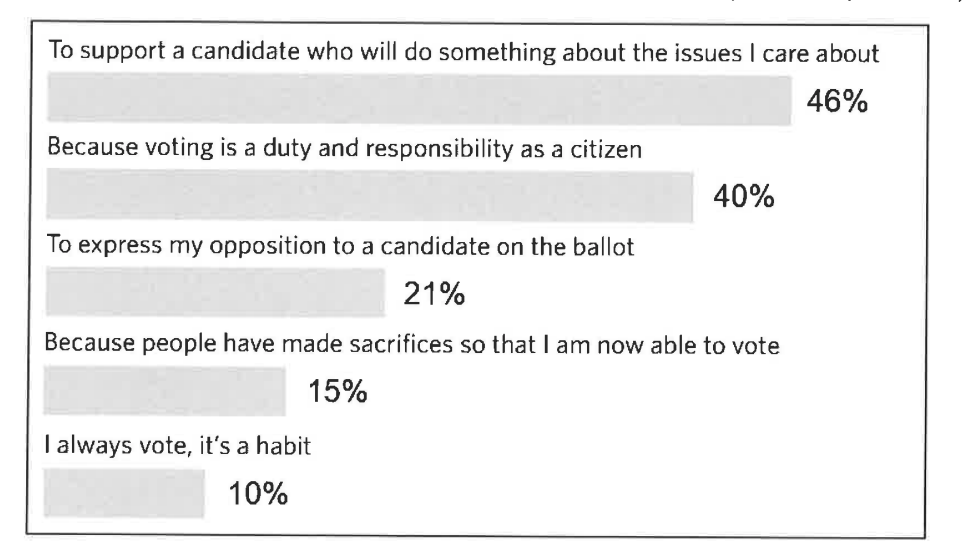
Why young people vote (2025)
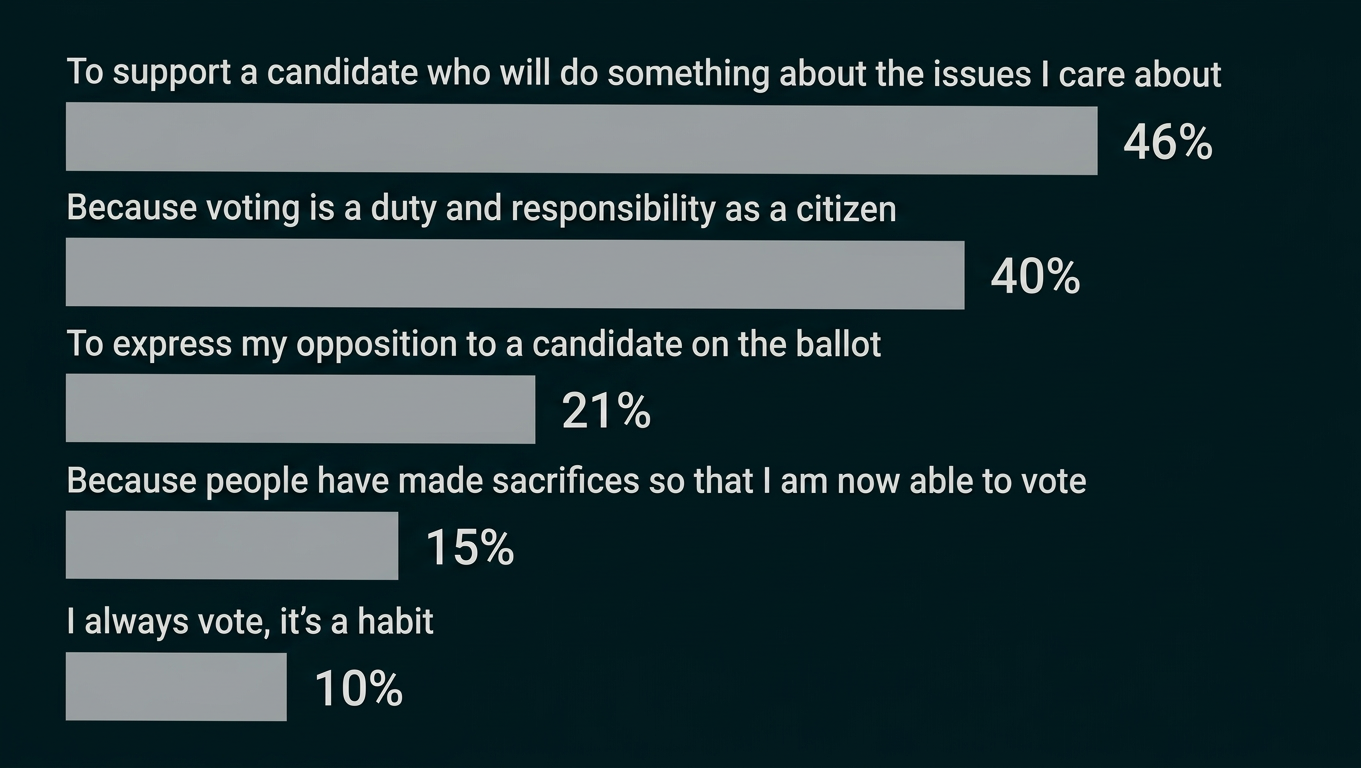
The percentage of young people, ages 18–34, who chose each option as one of their top three reasons for voting in the 2024 U.S. presidential election (2,064 respondents)
Adapted from: https://circle.tufts.edu/latest-research/2024-poll-barriers-issues-economy
[accessed: 14 September 2026]
Together with your partner, assess the role different factors play in influencing people’s voting decisions.
Agree on how your school can contribute to the campaign to prepare first-time voters.
Prüfling B
Your school is joining the campaign #YourVoiceMatters to encourage first-time voters to participate in the next election.
Comment on the material.
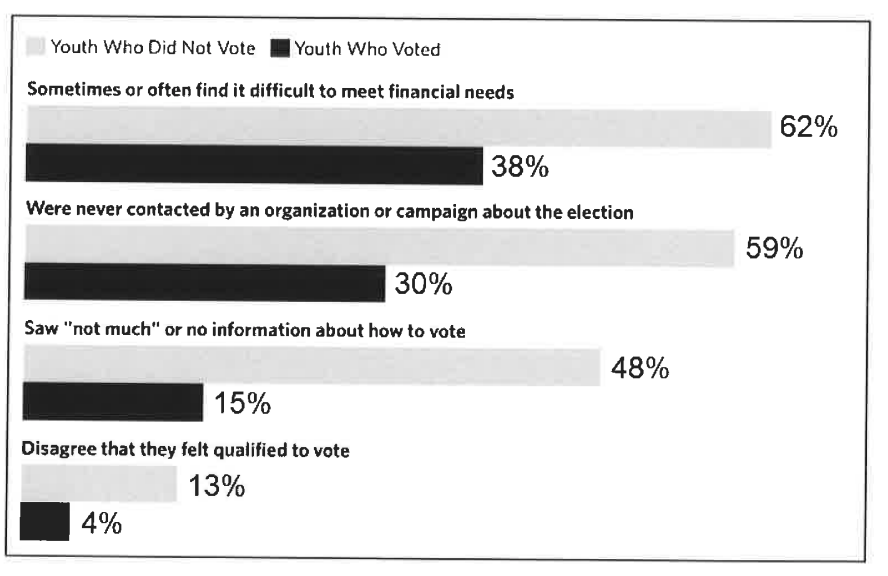
Youth who didn’t vote (2025)
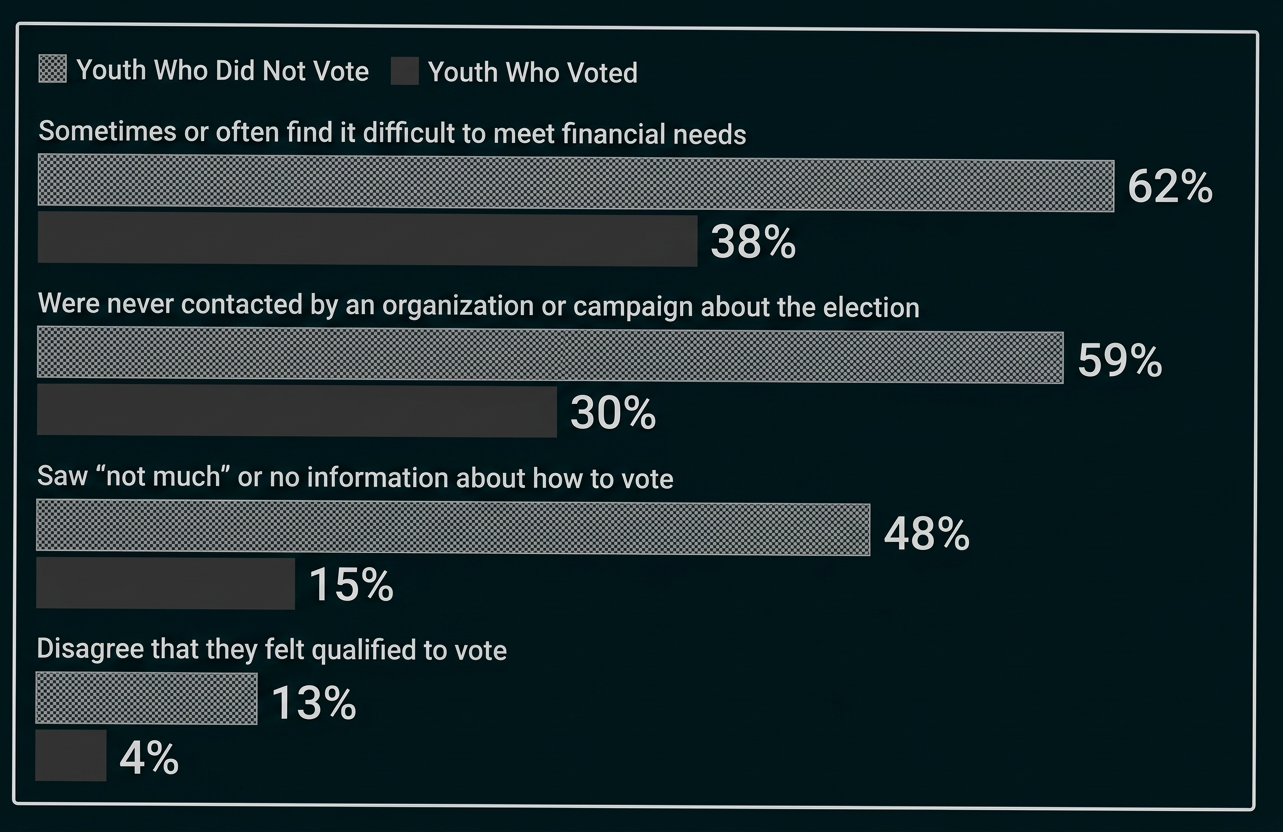
The percentage of young voters and non-voters (ages 18–34) in the 2024 U.S. presidential election for which each statement is true (2,064 respondents)
Adapted from: https://circle.tufts.edu/latest-research/2024-poll-barriers-issues-economy
[accessed: 14 September 2026]
Together with your partner, assess the role different factors play in influencing people’s voting decisions.
Agree on how your school can contribute to the campaign to prepare first-time voters.
Mit SchulLV Plus weiterlernen
Schalte alle Prüfungsaufgaben, Lösungen und Lerninhalte frei – alles an einem Ort.
Monatlich kündbar
Note:
Please note that these solutions are only suggestions. There are various possibilities for argumentation.
-
To begin with, ...
-
On the one hand / on the other hand ...
-
It must be considered ...
-
In my opinion ...
-
I agree / I disagree ...
-
One has to take into account that ...
Possible introductions
to the topic and the
argumentation
Prüfling A
-
The bar chart shows reasons why young people (ages 18–34) voted in the 2024 U.S. presidential election.
-
Top reasons include supporting candidates who address key issues (46%) and viewing voting as a civic duty (40%).
-
Expressing opposition to a candidate (21%) and honoring sacrifices made by past generations (15%) play secondary roles.
-
The data highlights that Gen Z voters are primarily motivated by concrete issues and civic responsibility.
Comment on
the material
Prüfling B
-
The material compares young voters and non-voters (ages 18–34) in the 2024 U.S. presidential election across key barrier factors.
-
62% of non-voters struggle to meet financial needs (vs 38% of voters), and 59% were never contacted by a campaign (vs 30% of voters).
-
48% of non-voters lacked voting information, and 13% felt unqualified to vote.
-
The material indicates that socioeconomic hardship, lack of direct outreach, and voter confusion significantly lower turnout.
Comment on
the material
Argumente für beide Prüfungsteilnehmer
Factors influencing voting decisions
-
Personal economic situation and concern over specific political issues.
-
Political education, access to reliable election information, and direct campaign engagement.
-
Social background, family values, and peer influences.
School contribution to the #YourVoiceMatters campaign
-
Hosting mock elections and non-partisan information sessions on election procedures.
-
Organizing panel discussions with local political candidates.
Mit SchulLV Plus weiterlernen
Schalte alle Prüfungsaufgaben, Lösungen und Lerninhalte frei – alles an einem Ort.
Monatlich kündbar