
Teil A
Die Vorlage eines Kerzenhalters für kugelförmige Kerzen ist ein Rotationskörper mit der Rotationsachse 
 Nebenstehende Skizze zeigt den Axialschnitt dieses Rotationskörpers. Der Punkt
 ist der Schnittpunkt der Geraden
 und
und 

Es gilt: 





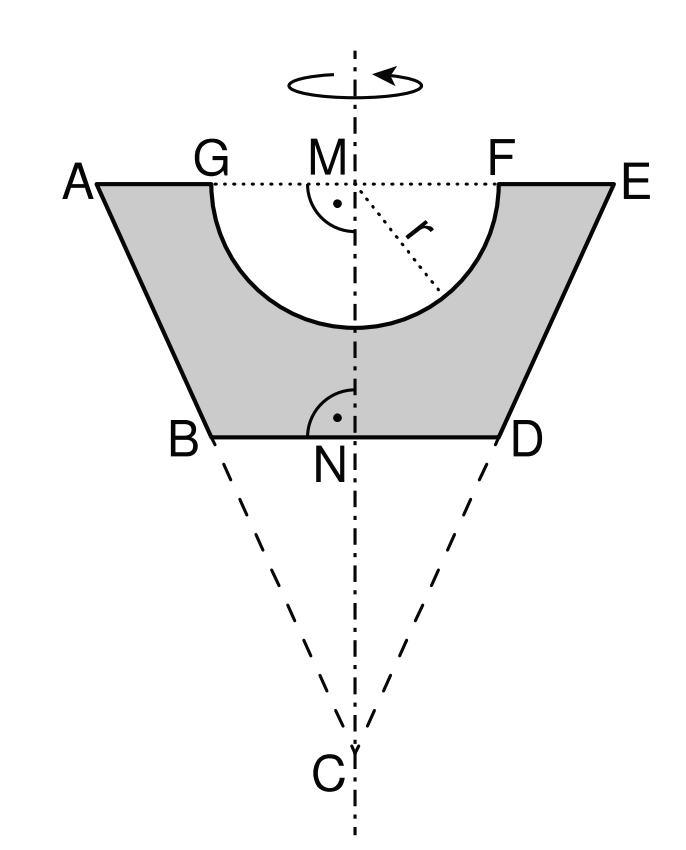
Berechne das Volumen des Rotationskörpers.
Runde auf zwei Stellen nach dem Komma.

 Zwischenergebnis: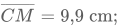
 Ergebnis:
 ![Formula: V=141{,}21 \;\mathrm{cm}^3 ]](https://www.schullv.de/resources/formulas/bc16a4ea5219be579d4c528f314fb5c6ff2078619ade380b8203419e637be683_light.svg)
![Formula: V=141{,}21 \;\mathrm{cm}^3 ]](https://www.schullv.de/resources/formulas/bc16a4ea5219be579d4c528f314fb5c6ff2078619ade380b8203419e637be683_dark.svg)
Der Kerzenhalter soll aus Marmor gefertigt werden. 
 des verwendeten Marmors hat eine Masse von

Berechne die Masse des Kerzenhalters. Runde auf ganze 

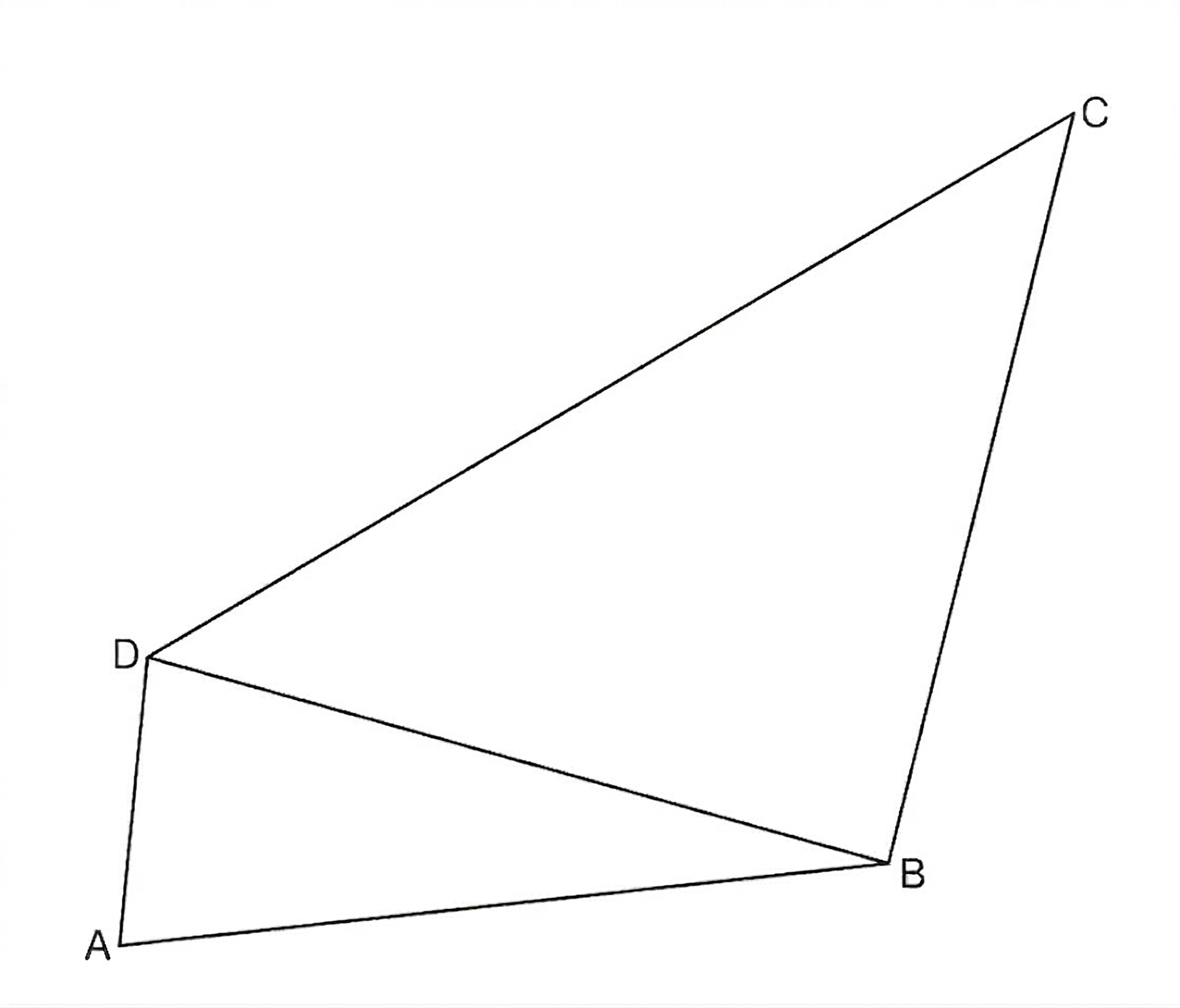
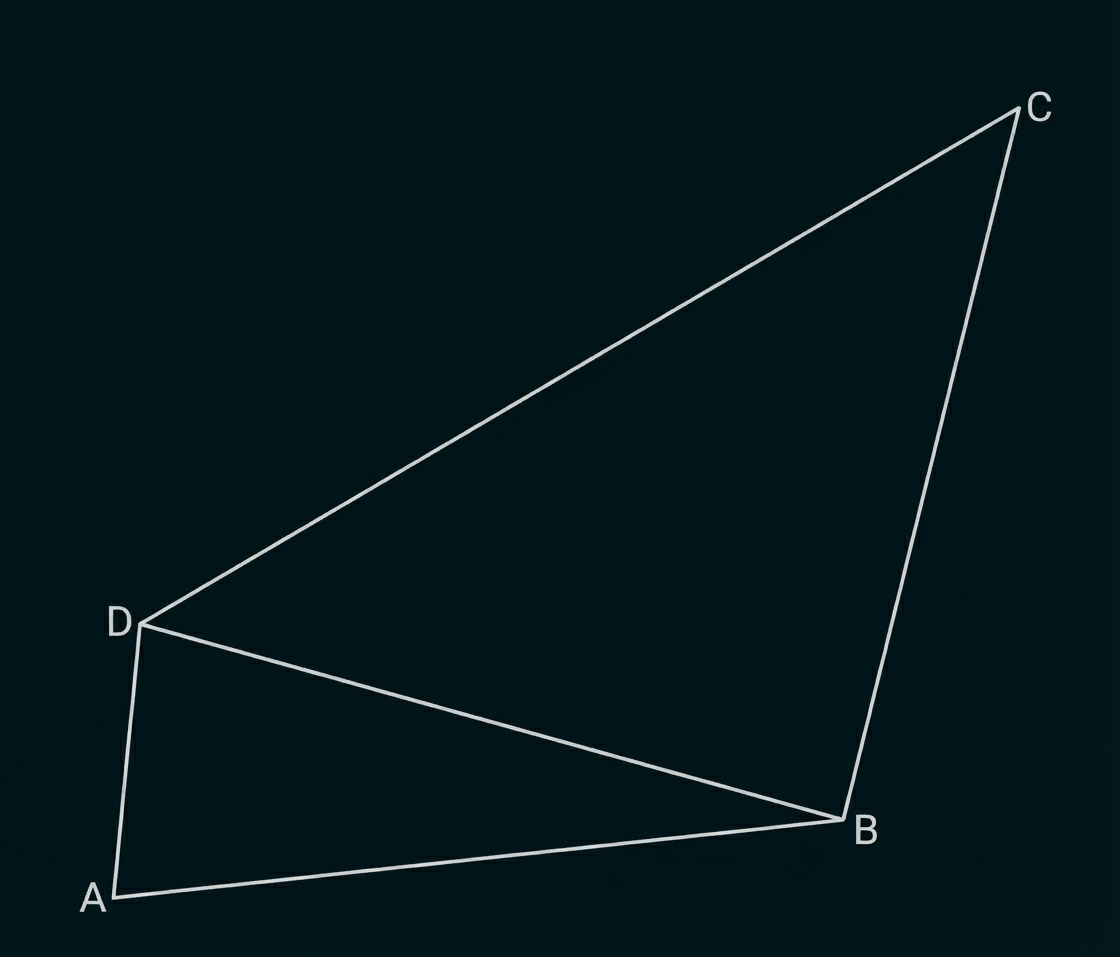
Gegeben ist das Viereck 

Es gilt: 

Runde im Folgenden auf zwei Stellen nach dem Komma.
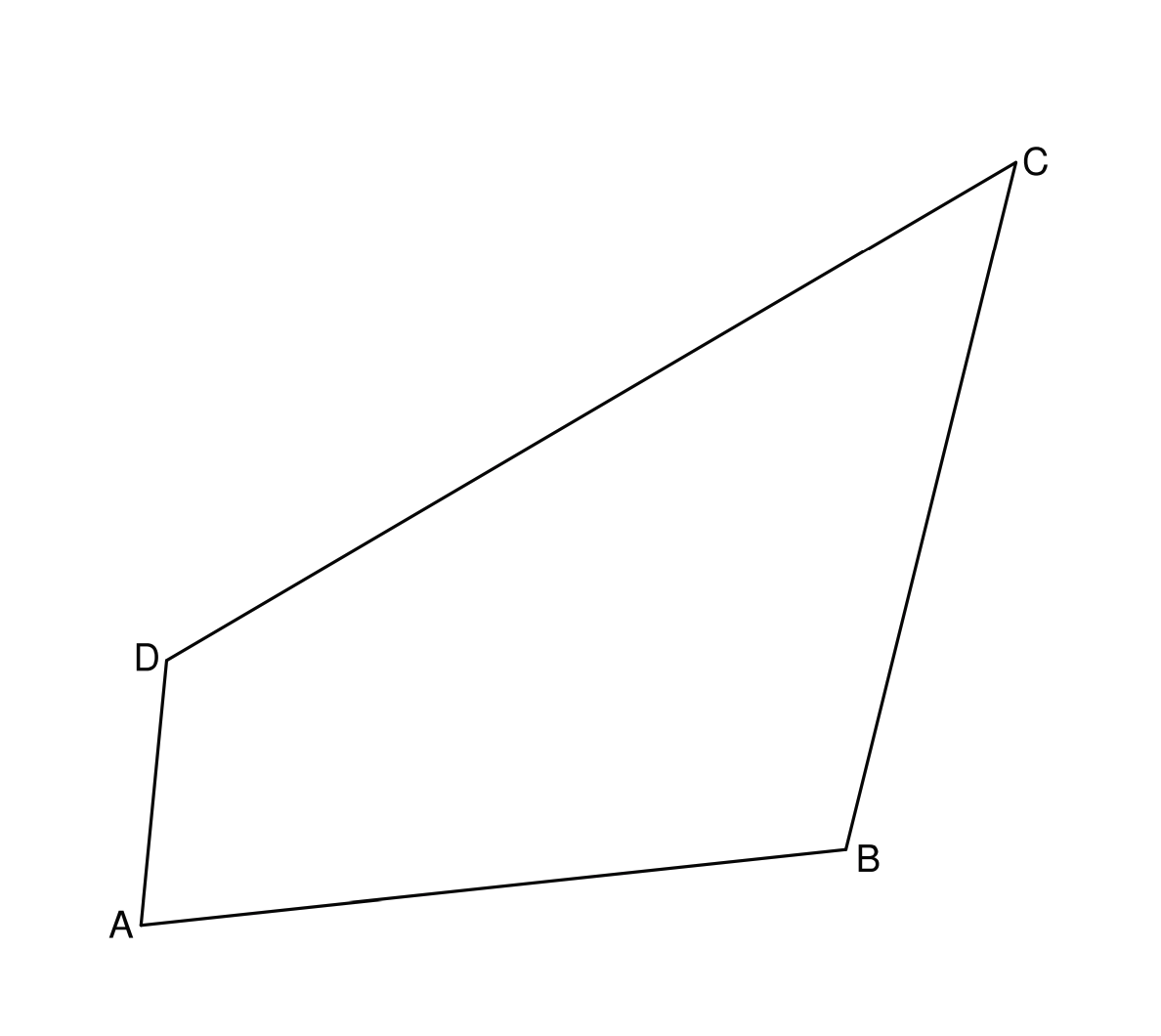
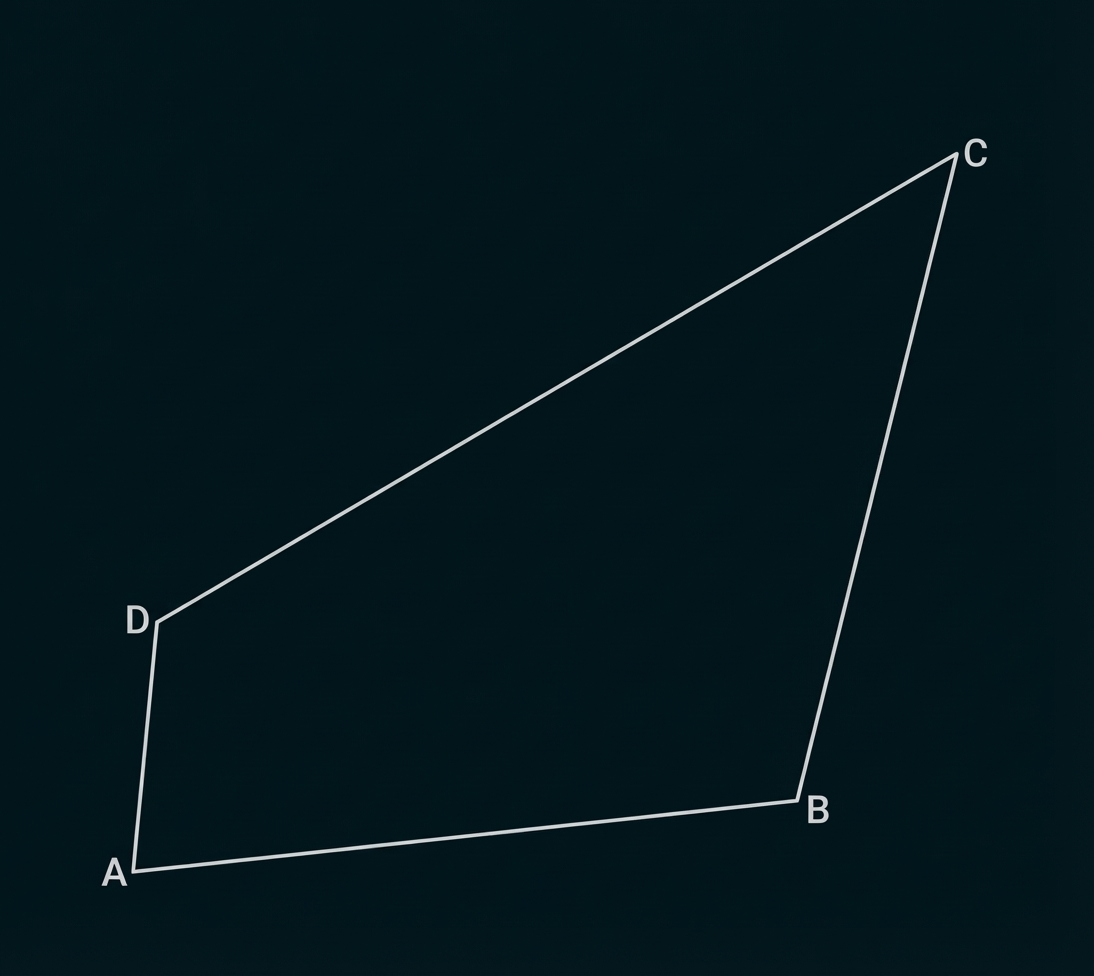
Zeichne die Strecke ![Formula: [BD]](https://www.schullv.de/resources/formulas/81321be7cebf0f62dd2d17eb2672a304860e19d2332537c149533ea87fb24877_light.svg)
![Formula: [BD]](https://www.schullv.de/resources/formulas/81321be7cebf0f62dd2d17eb2672a304860e19d2332537c149533ea87fb24877_dark.svg) in die Zeichnung zu A 2.0 ein.
in die Zeichnung zu A 2.0 ein.
Berechne sodann das Maß des Winkels 
 und die Länge der Strecke
 ![Formula: [BD].](https://www.schullv.de/resources/formulas/8fec4b9f842784b6f02e5fa1998b39e2481f724d78949205cd70cdc14182882b_light.svg)
![Formula: [BD].](https://www.schullv.de/resources/formulas/8fec4b9f842784b6f02e5fa1998b39e2481f724d78949205cd70cdc14182882b_dark.svg)

 Teilergebnisse:
 ![Formula: \measuredangle DBA=21{,}67^{\circ} ; \overline{BD}=7{,}96 \; \text{cm}]](https://www.schullv.de/resources/formulas/46c6c81b5e93c45b30c24550f228453ecbbe12074e0f90a9ba70de56000f3ead_light.svg)
![Formula: \measuredangle DBA=21{,}67^{\circ} ; \overline{BD}=7{,}96 \; \text{cm}]](https://www.schullv.de/resources/formulas/46c6c81b5e93c45b30c24550f228453ecbbe12074e0f90a9ba70de56000f3ead_dark.svg)
Berechne den Flächeninhalt des Vierecks
Ergebnis: ![Formula: A_{ABCD}=43{,}58 \;\mathrm{cm}^2]](https://www.schullv.de/resources/formulas/a633804f448610c480797d2da35e8d7fefd4e1814da880b00b8f6c44661b1ffd_light.svg)
![Formula: A_{ABCD}=43{,}58 \;\mathrm{cm}^2]](https://www.schullv.de/resources/formulas/a633804f448610c480797d2da35e8d7fefd4e1814da880b00b8f6c44661b1ffd_dark.svg)
Der Punkt 
 ist der Mittelpunkt der Strecke
 ![Formula: [BC].](https://www.schullv.de/resources/formulas/61e6ff22e5459f46f7242995b6ba54f3c286f2337512a89f8ecf65c81479ce7f_light.svg)
![Formula: [BC].](https://www.schullv.de/resources/formulas/61e6ff22e5459f46f7242995b6ba54f3c286f2337512a89f8ecf65c81479ce7f_dark.svg) Der Kreisbogen
Der Kreisbogen 
 mit dem Mittelpunkt schneidet die Strecke
 ![Formula: [AC]](https://www.schullv.de/resources/formulas/44be0e8147732b25a3f4757d561eaef3b973da61bf19e4e02bd99aa4a8ce7f9e_light.svg)
![Formula: [AC]](https://www.schullv.de/resources/formulas/44be0e8147732b25a3f4757d561eaef3b973da61bf19e4e02bd99aa4a8ce7f9e_dark.svg) in den Punkten und
in den Punkten und 

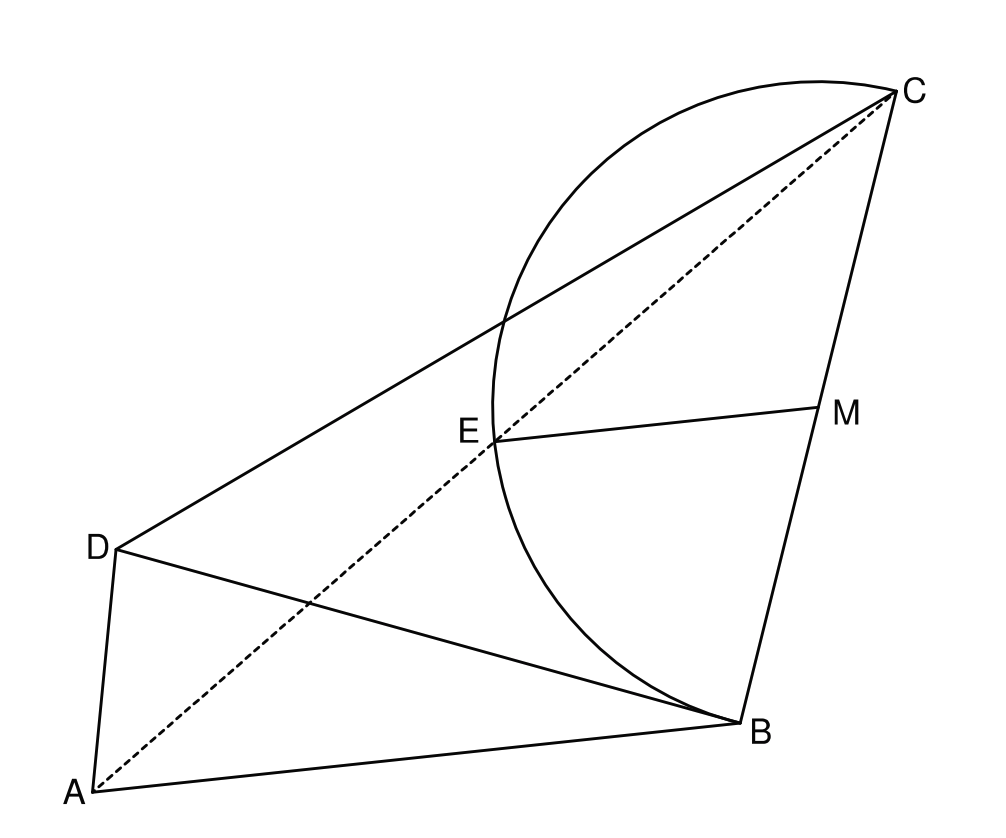
Zeichne den Kreisbogen und Strecke ![Formula: [EM]](https://www.schullv.de/resources/formulas/c30576c24a6cc79e13129443aea816bb5cc386a17c7f35d149f2bc823fe068b9_light.svg)
![Formula: [EM]](https://www.schullv.de/resources/formulas/c30576c24a6cc79e13129443aea816bb5cc386a17c7f35d149f2bc823fe068b9_dark.svg) in die Zeichnung zu A 2.0 ein.
in die Zeichnung zu A 2.0 ein.
Die Strecke ist parallel zur Strecke ![Formula: [AB].](https://www.schullv.de/resources/formulas/d61e2c49dfb88a5e04d2709bb7878843718ad3be81571df7a1f38061c4320e0b_light.svg)
![Formula: [AB].](https://www.schullv.de/resources/formulas/d61e2c49dfb88a5e04d2709bb7878843718ad3be81571df7a1f38061c4320e0b_dark.svg)
Begründe, weshalb für das Maß des Winkels 
 gilt:
gilt: 

Berechne sodann die Bogenlänge des Kreisbogens 
 mit dem Mittelpunkt

Berechne den Flächeninhalt der Figur, die durch den Kreisbogen und die Strecken und ![Formula: [BM]](https://www.schullv.de/resources/formulas/2ab8c2269d72746d1b67b3ae832b0037f38d88406509440ba86d9ae0150504b0_light.svg)
![Formula: [BM]](https://www.schullv.de/resources/formulas/2ab8c2269d72746d1b67b3ae832b0037f38d88406509440ba86d9ae0150504b0_dark.svg) begrenzt wird.
begrenzt wird.
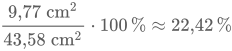
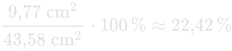
Bestimme sodann den prozentualen Anteil dieses Flächeninhalts am Flächeninhalt des Vierecks
Ein Floh kann bezogen auf seine Körpergröße sehr weit und sehr hoch springen.
Ein solcher Sprung kann näherungsweise durch die Parabel 
 beschrieben werden. Dabei entspricht


 der horizontal gemessenen Entfernung vom Absprungpunkt
 und
und 
 der zugehörigen Höhe über dem Boden. Der Floh landet im Punkt
 auf dem Boden.
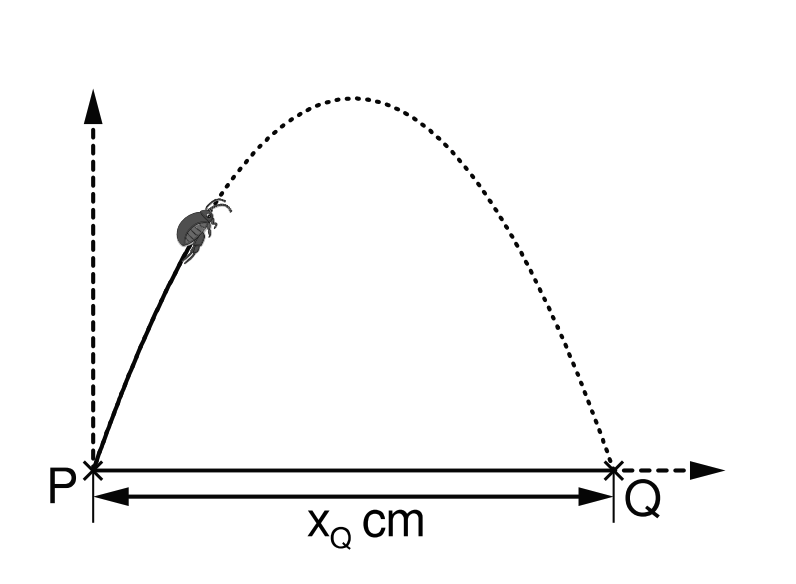
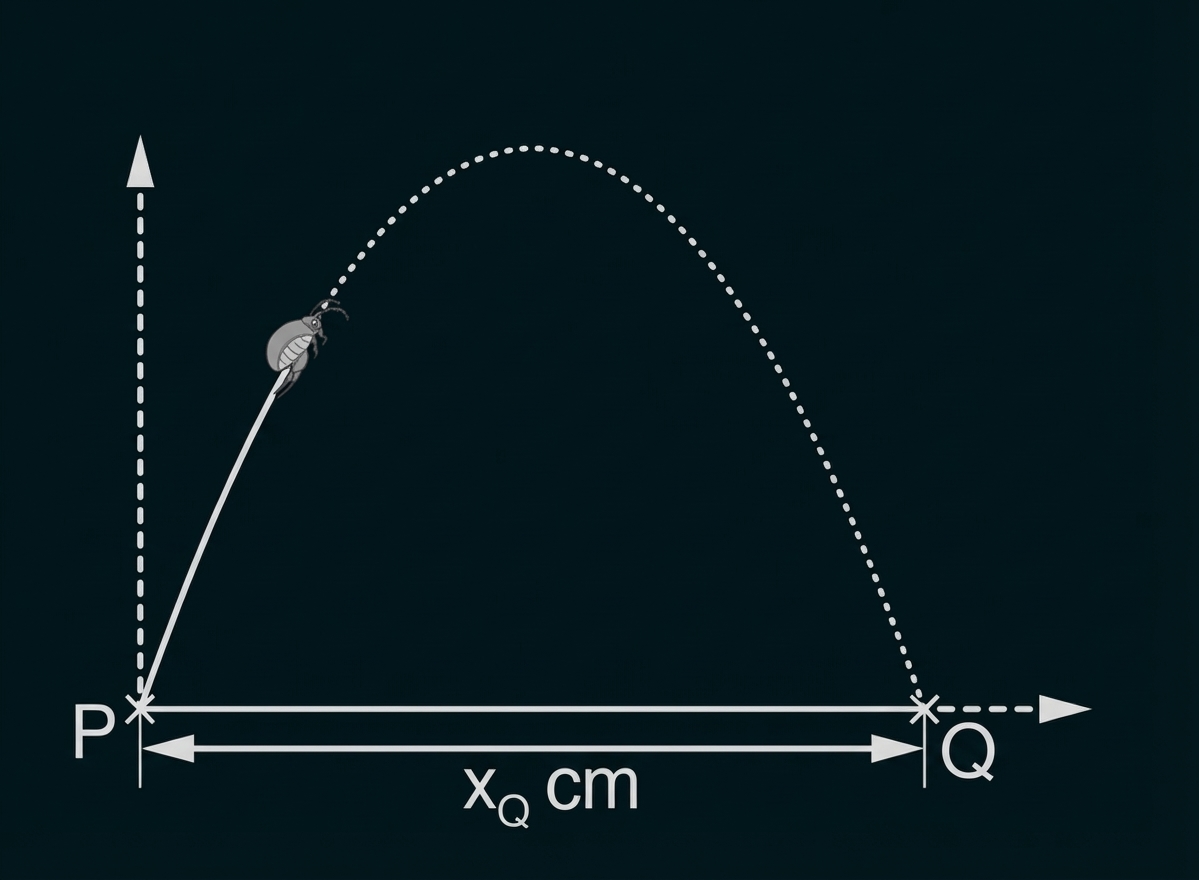
Berechne die Koordinaten des Scheitelpunkts 
 der Parabel

Zeichne sodann die Parabel 
 für
für ![Formula: x \in\left[0 ; x_Q\right]](https://www.schullv.de/resources/formulas/f0c7350fe36fe214ee5ba0837304c77bfc59b5b9aae01345c0eec4e3cc18db4b_light.svg)
![Formula: x \in\left[0 ; x_Q\right]](https://www.schullv.de/resources/formulas/f0c7350fe36fe214ee5ba0837304c77bfc59b5b9aae01345c0eec4e3cc18db4b_dark.svg) in das Koordinatensystem ein.
in das Koordinatensystem ein.
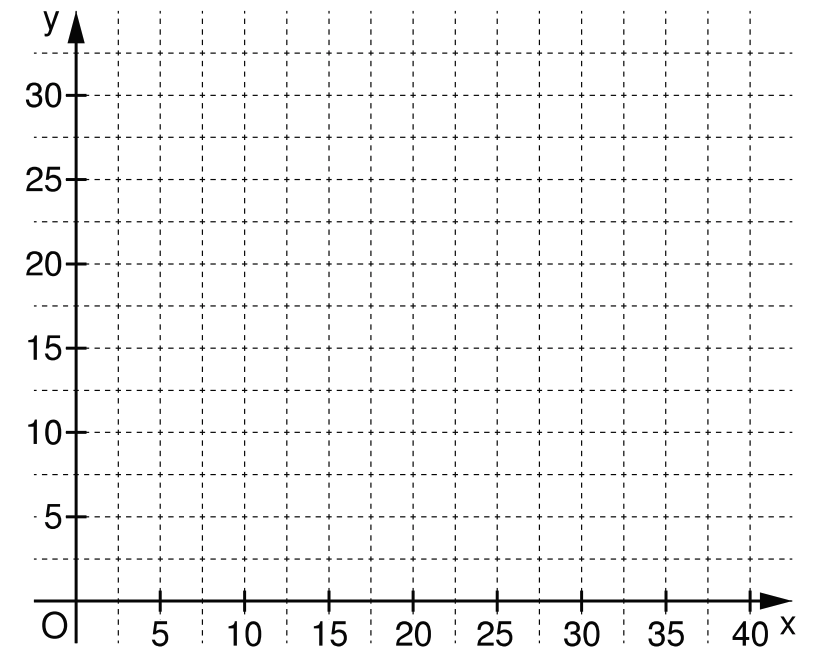
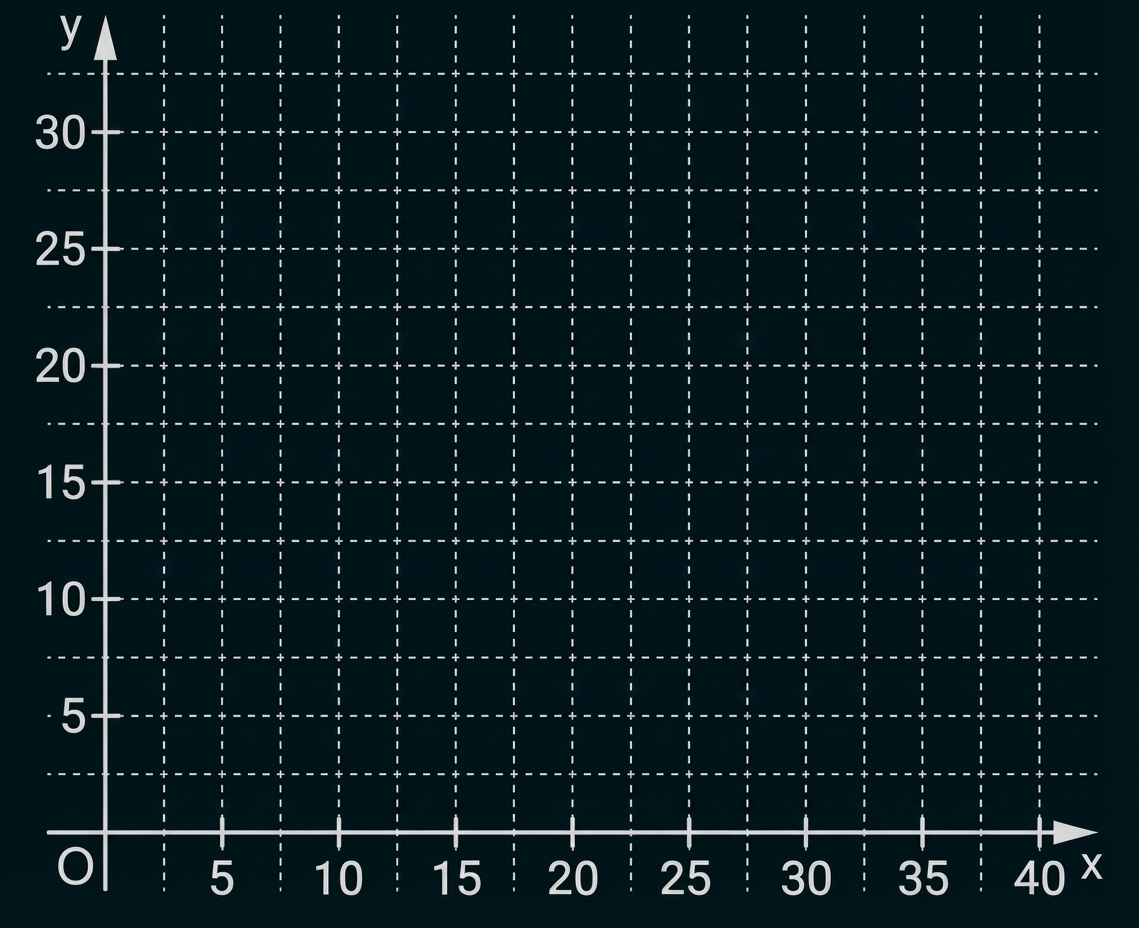
Gib die maximale Höhe und die Weite dieses Sprungs an.
Runde auf ganze Zentimeter.
maximale Höhe: __________
Weite: __________
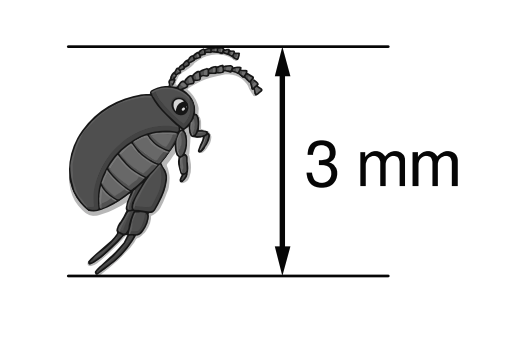
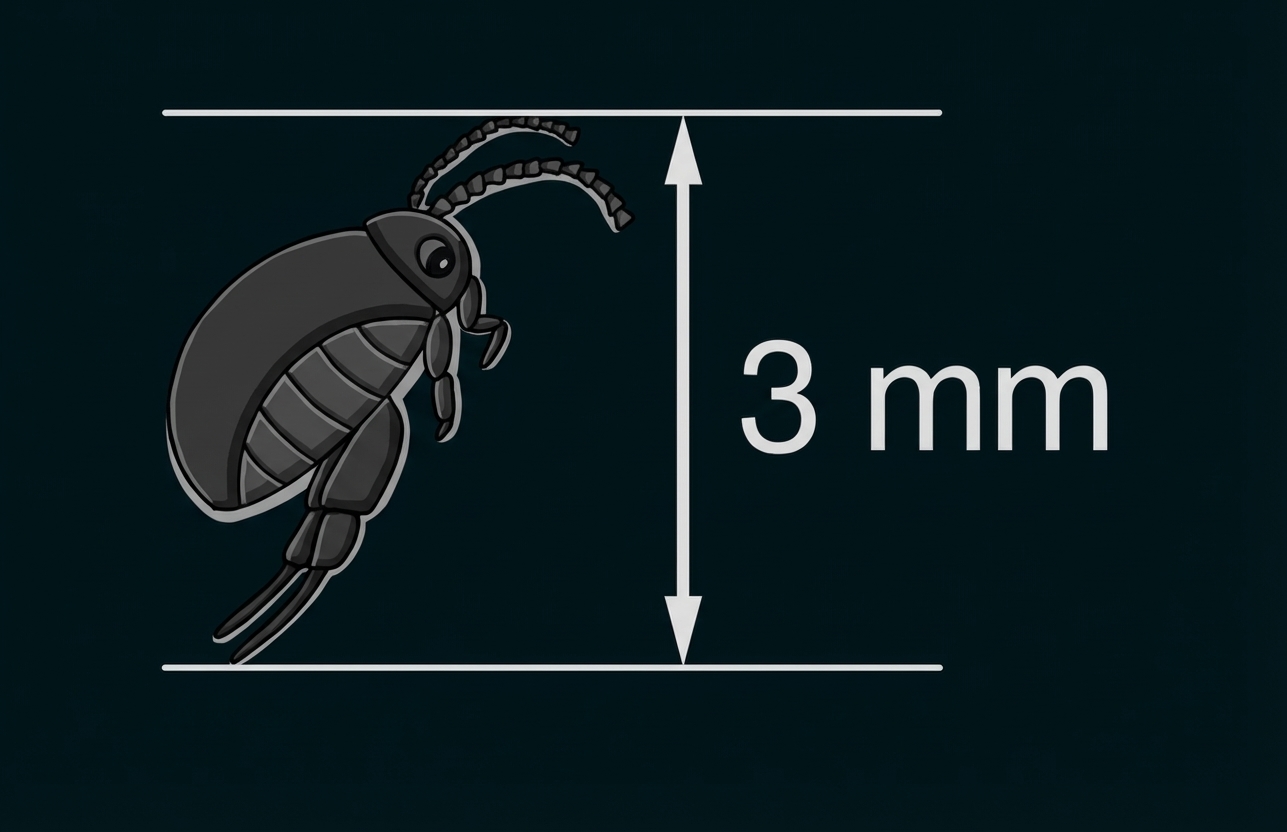
Der rechts abgebildete Floh kann bis zu 
 weit springen.
Kreuze an, wie weit ein 
 großer Mensch ungefähr springen würde, wenn er im Verhältnis zu seiner Körpergröße genauso weit wie dieser Floh springen könnte.


Weiter lernen mit SchulLV Plus!
monatlich kündbarSchulLV Plus-Vorteile im ÜberblickDu hast bereits einen Account?Radien bestimmen:






Höhe 
 mithilfe des 1. Strahlensatzes berechnen:
![Formula: \begin{array}[t]{rlll} \dfrac{\overline{CM}}{\overline{CN}} &=& \dfrac{\overline{ME}}{\overline{ND}} \\[5pt] \dfrac{\overline{C M}}{5{,}5\;\text{cm}}&=& \dfrac{4{,}5\;\text{cm}}{2{,}5\;\text{cm}}&\mid\; \cdot\, 5{,}5 \;\text{cm}\\[5pt] \overline{C M}&=&9{,}9\;\text{cm}\\[5pt] \end{array}](https://www.schullv.de/resources/formulas/aba3cb8c8583732bbcd6bceb9d12ad6689ac528e45b953fcff2f64a55f7fe293_light.svg)
![Formula: \begin{array}[t]{rlll} \dfrac{\overline{CM}}{\overline{CN}} &=& \dfrac{\overline{ME}}{\overline{ND}} \\[5pt] \dfrac{\overline{C M}}{5{,}5\;\text{cm}}&=& \dfrac{4{,}5\;\text{cm}}{2{,}5\;\text{cm}}&\mid\; \cdot\, 5{,}5 \;\text{cm}\\[5pt] \overline{C M}&=&9{,}9\;\text{cm}\\[5pt] \end{array}](https://www.schullv.de/resources/formulas/aba3cb8c8583732bbcd6bceb9d12ad6689ac528e45b953fcff2f64a55f7fe293_dark.svg)
Volumina bestimmen:
Großer Kegel: 

Kleiner Kegel: 

Halbkugel: 

Gesamtvolumen des Kerzenhalters berechnen:
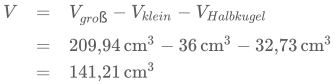
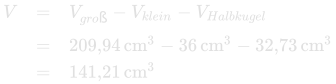
Das Volumen des Rotationskörpers beträgt 



Die Masse des Kerzenhalters beträgt ca. 

Berechnung des Winkels 
 mithilfe des Sinussatzes:
![Formula: \begin{array}[t]{rlll} \dfrac{\sin (\measuredangle D B A)}{\overline{A D}}&=& \dfrac{\sin (\measuredangle A D B)}{\overline{A B}} \\[5pt] \dfrac{\sin (\measuredangle D B A)}{3\;\text{cm}}&=& \dfrac{\sin (80^\circ)}{8\;\text{cm}}&\mid\; \cdot \, 3\;\text{cm} \\[5pt] \sin (\measuredangle D B A)&=& \dfrac{\sin (80^\circ)}{8\;\text{cm}}\cdot 3\;\text{cm} &\mid\; \sin^{-1} \\[5pt] \measuredangle D B A&=& \sin^{-1}\left(\dfrac{\sin (80^\circ)}{8\;\text{cm}}\cdot 3\;\text{cm} \right)\\[5pt] \measuredangle D B A&\approx& 21{,}67^\circ \\[5pt] \end{array}](https://www.schullv.de/resources/formulas/bdf6b5b988203920036909706091771b312516769496ef93c58d9e410cd439c5_light.svg)
![Formula: \begin{array}[t]{rlll} \dfrac{\sin (\measuredangle D B A)}{\overline{A D}}&=& \dfrac{\sin (\measuredangle A D B)}{\overline{A B}} \\[5pt] \dfrac{\sin (\measuredangle D B A)}{3\;\text{cm}}&=& \dfrac{\sin (80^\circ)}{8\;\text{cm}}&\mid\; \cdot \, 3\;\text{cm} \\[5pt] \sin (\measuredangle D B A)&=& \dfrac{\sin (80^\circ)}{8\;\text{cm}}\cdot 3\;\text{cm} &\mid\; \sin^{-1} \\[5pt] \measuredangle D B A&=& \sin^{-1}\left(\dfrac{\sin (80^\circ)}{8\;\text{cm}}\cdot 3\;\text{cm} \right)\\[5pt] \measuredangle D B A&\approx& 21{,}67^\circ \\[5pt] \end{array}](https://www.schullv.de/resources/formulas/bdf6b5b988203920036909706091771b312516769496ef93c58d9e410cd439c5_dark.svg)
Berechnung des Winkels 
 mithilfe der Innenwinkelsumme von Dreiecken:


Berechnung der Strecke 
 mithilfe des Sinussatzes:
![Formula: \begin{array}[t]{rlll} \dfrac{\overline{BD}}{\sin (78{,}33^\circ)}&=& \dfrac{8\;\text{cm}}{\sin(80^\circ)}&\mid\; \cdot \sin(78{,}33^\circ) \\[5pt] \overline{BD}&\approx&7{,}96\;\text{cm}\\[5pt] \end{array}](https://www.schullv.de/resources/formulas/5a53e64603fd40033e9d598ed52fc6257b9937035094ccbc2f32754c370e913f_light.svg)
![Formula: \begin{array}[t]{rlll} \dfrac{\overline{BD}}{\sin (78{,}33^\circ)}&=& \dfrac{8\;\text{cm}}{\sin(80^\circ)}&\mid\; \cdot \sin(78{,}33^\circ) \\[5pt] \overline{BD}&\approx&7{,}96\;\text{cm}\\[5pt] \end{array}](https://www.schullv.de/resources/formulas/5a53e64603fd40033e9d598ed52fc6257b9937035094ccbc2f32754c370e913f_dark.svg)
Viereck 
 in zwei Dreiecke
 und
und 
 aufteilen
Winkel 
 berechnen:


Für die Höhe 
 des Dreiecks auf der Grundseite
 gilt:
gilt:
![Formula: \begin{array}{rcll} \sin(\measuredangle DBA) &=& \dfrac{h_{\overline{AB}}}{\overline{BD}} \\[5pt] \sin\left(21{,}67^{\circ}\right) &=& \dfrac{h_{\overline{AB}}}{7{,}96\; \text{cm}} \; &\mid \, \cdot \, 7{,}96 \; \text{cm} \\[5pt] h_{\overline{AB}} &\approx& 2{,}9393 \; \text{cm} \end{array}](https://www.schullv.de/resources/formulas/cb88e4aaa755d43675c4f91b07170407fb6b0a0a5258419b85e8316d066f793e_light.svg)
![Formula: \begin{array}{rcll} \sin(\measuredangle DBA) &=& \dfrac{h_{\overline{AB}}}{\overline{BD}} \\[5pt] \sin\left(21{,}67^{\circ}\right) &=& \dfrac{h_{\overline{AB}}}{7{,}96\; \text{cm}} \; &\mid \, \cdot \, 7{,}96 \; \text{cm} \\[5pt] h_{\overline{AB}} &\approx& 2{,}9393 \; \text{cm} \end{array}](https://www.schullv.de/resources/formulas/cb88e4aaa755d43675c4f91b07170407fb6b0a0a5258419b85e8316d066f793e_dark.svg)
Analog folgt für die Höhe 
 des Dreiecks auf der Grundseite :
![Formula: \begin{array}{rcll} \sin(\measuredangle CBD) &=& \dfrac{h_{\overline{BD}}}{\overline{BC}} \\[5pt] \sin\left(88{,}33^{\circ}\right) &=& \dfrac{h_{\overline{BD}}}{8 \; \text{cm}} \; &\mid \, \cdot \, 8 \; \text{cm} \\[5pt] h_{\overline{BD}} &\approx& 7{,}9966 \; \text{cm} \end{array}](https://www.schullv.de/resources/formulas/a400d0f36be0d32c3a7dcd186b3a259c6c0c16c314b817b9cf5896e573f3fa69_light.svg)
![Formula: \begin{array}{rcll} \sin(\measuredangle CBD) &=& \dfrac{h_{\overline{BD}}}{\overline{BC}} \\[5pt] \sin\left(88{,}33^{\circ}\right) &=& \dfrac{h_{\overline{BD}}}{8 \; \text{cm}} \; &\mid \, \cdot \, 8 \; \text{cm} \\[5pt] h_{\overline{BD}} &\approx& 7{,}9966 \; \text{cm} \end{array}](https://www.schullv.de/resources/formulas/a400d0f36be0d32c3a7dcd186b3a259c6c0c16c314b817b9cf5896e573f3fa69_dark.svg)
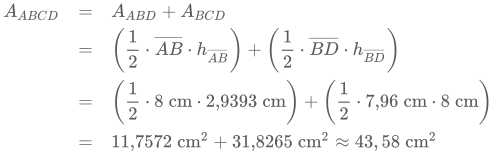
Damit folgt für den Flächeninhalt des Vierecks :
Der Winkel 
 ist ein Stufenwinkel zum Winkel
 an den Parallelen und
 Somit gilt:


Der Radius des Bogens ist so lang wie die Hälfte der Strecke 
 , also

Für die Bogenlänge 
 des Kreisbogens
 gilt damit:
![Formula: \begin{array}{rcll} b &=&\dfrac{\measuredangle EMB}{360^{\circ}} \cdot 2 \cdot \pi \cdot r \\[5pt] &=& \dfrac{70^{\circ}}{360^{\circ}} \cdot 2 \cdot \pi \cdot 4 \; \text{cm} \\[5pt] &=& 4{,}89 \; \text{cm} \end{array}](https://www.schullv.de/resources/formulas/e0b07b00352c2483f36ced331a1d3ed021646c0cb999f17bd7f841b8e093818a_light.svg)
![Formula: \begin{array}{rcll} b &=&\dfrac{\measuredangle EMB}{360^{\circ}} \cdot 2 \cdot \pi \cdot r \\[5pt] &=& \dfrac{70^{\circ}}{360^{\circ}} \cdot 2 \cdot \pi \cdot 4 \; \text{cm} \\[5pt] &=& 4{,}89 \; \text{cm} \end{array}](https://www.schullv.de/resources/formulas/e0b07b00352c2483f36ced331a1d3ed021646c0cb999f17bd7f841b8e093818a_dark.svg)
Flächeninhalt des Kreissektors berechnen:
![Formula: \begin{array}{rcll} A_{Kreissektor} &=& \dfrac{\measuredangle EMV}{360^{\circ}} \cdot \pi \cdot r^2 \\[5pt] &=& \dfrac{70^{\circ}}{360^{\circ}} \cdot \pi \cdot (4 \; \text{cm})^2 \\[5pt] &\approx& 9{,}77 \; \text{cm}^2 \end{array}](https://www.schullv.de/resources/formulas/f9f6364b6bcd9cc412ff455e75fa6f822e92e8c39f88a957f61c58075c26dcda_light.svg)
![Formula: \begin{array}{rcll} A_{Kreissektor} &=& \dfrac{\measuredangle EMV}{360^{\circ}} \cdot \pi \cdot r^2 \\[5pt] &=& \dfrac{70^{\circ}}{360^{\circ}} \cdot \pi \cdot (4 \; \text{cm})^2 \\[5pt] &\approx& 9{,}77 \; \text{cm}^2 \end{array}](https://www.schullv.de/resources/formulas/f9f6364b6bcd9cc412ff455e75fa6f822e92e8c39f88a957f61c58075c26dcda_dark.svg)
Prozentualen Anteil der Fläche des Kreissektors an der Fläche des Vierecks bestimmen:
Die Parabelgleichung lautet 

Hieraus folgen die Parameter 
 und
und 

Scheitelpunkt:
-

 Koordinate



-

 Koordinate



Der Scheitelpunkt liegt bei 

Um die Parabel zeichnen zu können, müssen zuerst die Nullstellen berechnet werden:


Satz vom Nullprodukt:
-
Erster Fall: Der Teil vor der Klammer ist Null.


-
Zweiter Fall: Der Inhalt der Klammer wird Null.
![Formula: \begin{array}[t]{rlll} -0{,}1x+3{,}5&=&0 &\mid\; -3{,}5 \\[5pt] -0{,}1x&=&-3{,}5&\mid\; \div (-0{,}1)\\[5pt] x_2&=&35 \\[5pt]\end{array}](https://www.schullv.de/resources/formulas/cb85da06375011ebea87f34c6adfbd49115893655f4e366c3c1f949ab946ea87_light.svg)
![Formula: \begin{array}[t]{rlll} -0{,}1x+3{,}5&=&0 &\mid\; -3{,}5 \\[5pt] -0{,}1x&=&-3{,}5&\mid\; \div (-0{,}1)\\[5pt] x_2&=&35 \\[5pt]\end{array}](https://www.schullv.de/resources/formulas/cb85da06375011ebea87f34c6adfbd49115893655f4e366c3c1f949ab946ea87_dark.svg)
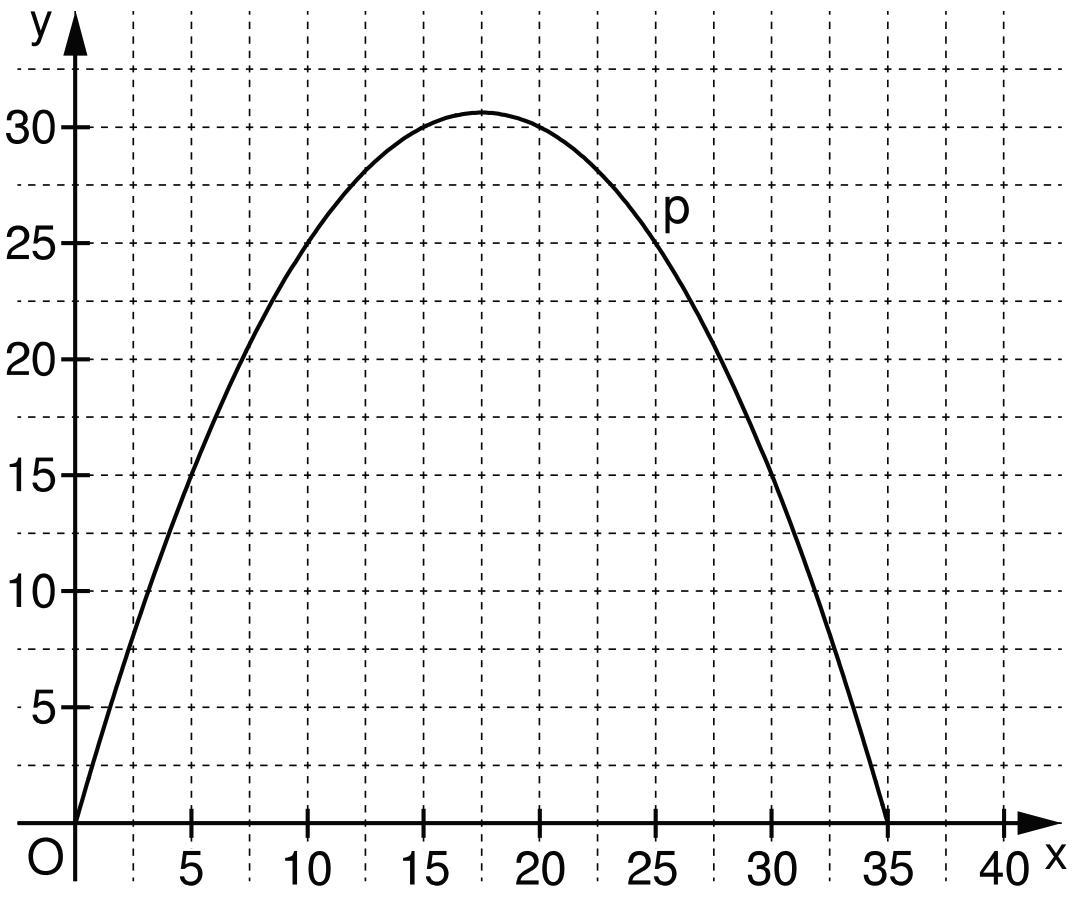
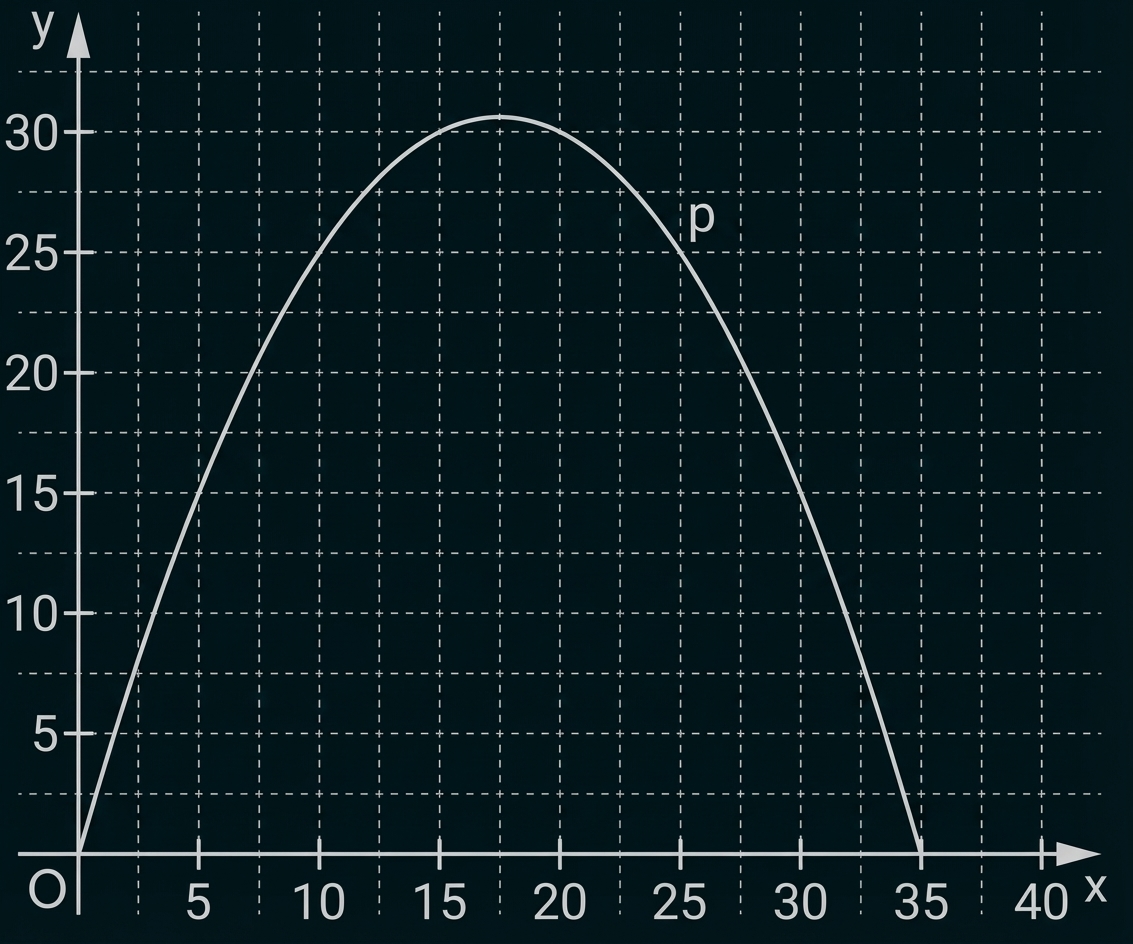
Die maximale Höhe entspricht der Koordinate des Scheitelpunkts 
 .
.
Wert: 

Gerundet auf ganze Zentimeter: 

Die Weite des Sprungs entspricht der Differenz zwischen dem Startpunkt und dem Landepunkt 

Rechnung: 

Zusammenfassend springt der Floh etwa hoch und legt dabei eine Distanz von exakt 
 zurück.
Einheiten angleichen:
Größe des Flohs: 

Sprungweite des Flohs: 

Verhältnis berechnen:


Auf den Menschen übertragen:




